
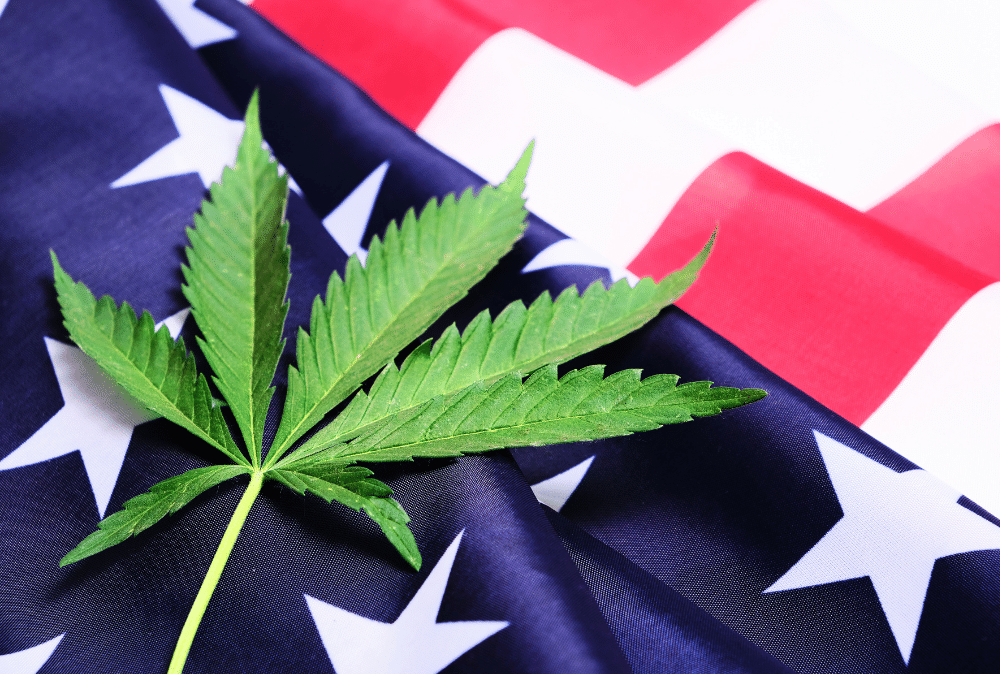
In December 2025, President Trump signed an executive order that directs the federal government to begin the process of rescheduling marijuana from Schedule I to Schedule III under the federal Controlled Substances Act (CSA). This is the first real federal shift in cannabis policy since the CSA was enacted in 1970. Make no mistake, it’s a historic moment for patients, researchers, advocates, and everyday people who’ve long hoped the federal government would finally treat cannabis like the medicine so many have already come to rely on.
But federal marijuana rescheduling has also got people talking, hoping, worrying, and imagining what the future could look like. Let’s get into it.
Under the Controlled Substances Act, drugs are grouped into “schedules” based on how dangerous they are considered and whether they have accepted medical uses. Schedule I is the most restrictive: drugs in this category are said to have no accepted medical use and a high potential for abuse. Marijuana has been stuck in this category for more than five decades — right there with heroin and LSD.
In contrast, Schedule III substances are considered to have a currently accepted medical use and a lower potential for abuse. A few examples of medications classified as Schedule III would be certain anabolic steroids and ketamine. Moving cannabis into Schedule III through the federal rescheduling process means, for the first time ever, the federal government would officially acknowledge that cannabis does have valid medical applications.
It’s important to note right up front: rescheduling is not legalization. It doesn’t decriminalize marijuana at the federal level, it doesn’t make recreational use legal nationwide, and it won’t automatically change your state’s medical cannabis laws. But it does create new possibilities — especially for people who use cannabis as medicine.
For many medical cannabis patients, federal rescheduling feels like a long-overdue recognition of something they’ve known all along: cannabis helps people. Folks living with chronic pain, neurological conditions, PTSD, cancer-related symptoms, and more turn to cannabis for relief, often when other pharmaceuticals haven’t helped. Patients and advocates have been pushing for federal acknowledgment of that reality for years.
Rescheduling doesn’t immediately make cannabis available at a pharmacy with a prescription like other medicines, but it does pave the way for that possibility in the future — especially if the FDA and lawmakers follow through with additional reforms. Research could become easier, insurance coverage might one day be on the table, and doctors could someday prescribe cannabis in a way that’s fully integrated into mainstream medical practice.
For patients who’ve felt stigmatized or ignored by a federal system that long insisted cannabis had no medical value, this is emotional and transformative. It’s not the end of the journey, but it’s a milestone that shows federal policy is beginning to reflect scientific evidence and real-world experience.
One of the most exciting parts of rescheduling is what it means for research. For decades, federal cannabis research has been painstakingly slow because scientists had to navigate intense regulatory barriers just to study the plant. Many promising scientific questions about dosage, treatment for specific conditions, long-term effects, tailored cannabinoid therapies, etc. simply haven’t been explored at scale because of the plant’s Schedule I status.
By moving cannabis to a class of medication has accepted medical use, rescheduling helps lower some of those barriers. Rescheduling could open the door to more clinical trials, more data, and eventual FDA-approved cannabis-based medicines. Imagine a future where cannabis-derived medications are developed not just by patients and caregivers, but by mainstream medical science backed by rigorous evidence.
That doesn’t happen overnight, though. The transition from policy shift to published research findings takes time, patience, and continued advocacy. But the rescheduling decision is a foundational change that finally makes that forward progression possible.
When marijuana moves to Schedule III, it will change the legal and economic landscape for medical cannabis providers. One of the most significant shifts relates to federal taxation: cannabis businesses have long operated under IRS code §280E, which prevents them from deducting ordinary business expenses, dramatically increasing their tax burden. Rescheduling could ease that strain, freeing up resources to reinvest into patient care and scientific development.
Banks and financial institutions may also feel more comfortable engaging with cannabis-related entities once the federal risk profile changes, which could help clinics, cooperatives, and medical providers secure more stable financing. Heck, it’d even help patients and consumers by allowing more traditional payment options in the dispensaries. It could make the entire sector easier to operate in responsibly and sustainably, legitimizing the plant even further.
If you’re a patient, caregiver, clinician, researcher, or advocate, the federal rescheduling of marijuana is worth celebrating — not because every barrier has fallen, but because the government is finally acknowledging what so many of you have said for years: cannabis has medical value and deserves to be studied, understood, and used responsibly.
This is a moment to feel hopeful, to stay engaged, and to continue pushing for the policies that support safe access, rigorous science, and compassionate care. The road ahead will still have twists and turns, but marijuana rescheduling in 2025 marks a new chapter in the story — one where medicine, science, and human experience begin to shape federal policy rather than outdated stigma. That’s something worth talking about.